
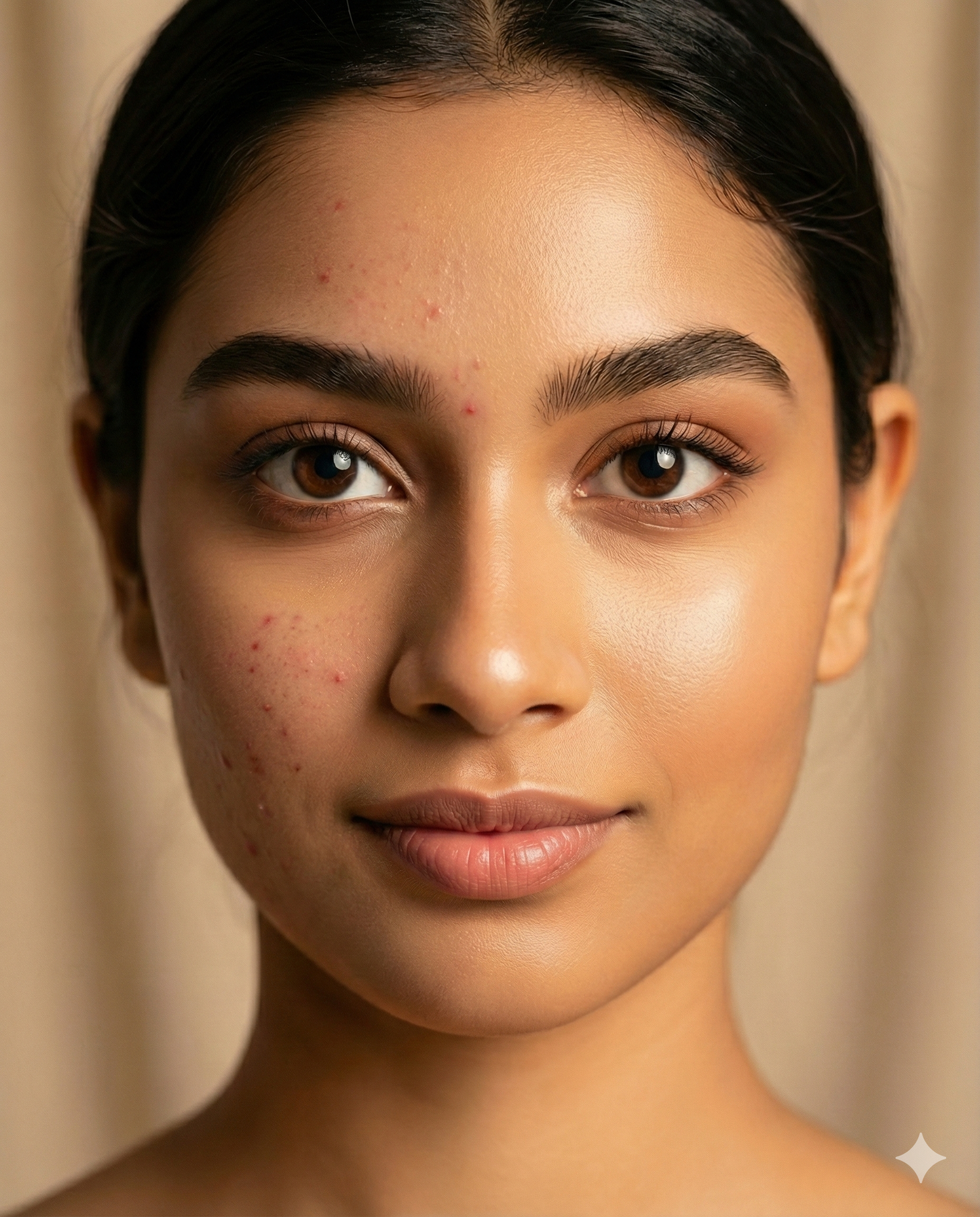
Acne Uncovered.
Evidence-based truths for your healthiest skin.
Introduction
Tips from social media, home remedies, and advice from friends often spread myths that can make acne worse instead of better. Many individuals use various products without knowing what truly works for their skin. This blog aims to clarify the confusion by explaining the most common myths and facts about acne treatment that everyone should know.
The Science of Ingredients
To achieve your healthiest skin, it is vital to look at the ingredients that have clinical backing. Here are the evidence-based "truths" found in professional treatments:
Retinoids
The gold standard for increasing cell turnover and preventing clogged pores before they start.
Salicylic Acid
A BHA that penetrates deep into pores to dissolve the "glue" holding dead skin cells together.
Benzoyl Peroxide
A powerful antimicrobial that kills C. acnes bacteria and reduces inflammatory redness.
Understanding Acne – The Basics
Acne happens when hair follicles get blocked by excess oil, dead skin cells, and bacteria. This blockage causes pimples, blackheads, whiteheads, or painful cysts. Several factors influence acne, including hormonal changes, genetics, stress, diet, lifestyle habits, and skincare routines.
Although acne is often linked to teenagers, adults can also break out because of hormonal imbalances, stress, or environmental factors. Acne can show up on the face, chest, back, shoulders, and even arms. It’s important to understand the basic causes of acne. Treating acne without knowing the underlying reason usually leads to poor results.
Common Acne Treatment Myths
Click a card below to see the medical reality.
"Acne Is Caused Only by Poor Hygiene"
Acne is not caused by poor hygiene. Washing your face too often or scrubbing harshly can damage the skin barrier and worsen breakouts.
"Popping Pimples Helps Them Heal Faster"
It pushes bacteria deeper into the skin. This increases inflammation, slows healing, and raises the risk of acne scars.
"Oily Skin Does Not Need Moisturizer"
Skipping moisturizer can cause skin to produce more oil to compensate for dryness. A lightweight moisturizer helps balance oil production.
"Sun Exposure Clears Acne"
Sun exposure may temporarily reduce oil, but it eventually thickens the skin and increases long-term oil production.
"Home Remedies Are Always Safe"
Lemon juice, toothpaste, or baking soda can irritate the skin and disrupt its natural barrier. Natural does not always mean safe.
Acne Treatment Facts
- Fact 1: Consistency is Key A consistent skincare routine using gentle, acne-friendly products is essential for long-term improvement.
- Fact 2: Type-Specific Treatment Treatment depends on whether you have blackheads, inflammatory acne, or cystic breakouts.
- Fact 3: Lifestyle Matters While diet doesn't cause acne alone, healthy choices and stress management support overall skin health.
- Fact 4: Professional Oversight Dermatologist-guided treatments reduce the risk of permanent scars and post-inflammatory pigmentation.
- Fact 5: Patience is Required Visible results typically take 4 to 6 weeks. Stopping treatment early can delay progress.
When to Seek Professional Care
If acne is painful, persistent, or leaving scars, professional care is recommended. Clinics like Banker Skin & Smile Clinic focus on personalized acne care, combining medical expertise with skin-friendly treatments for long-lasting results.
Simple Acne Care Tips
- Wash your face twice a day with a gentle, acne-safe cleanser.
- Avoid touching or picking at active breakouts.
- Thoroughly remove all makeup before going to bed.
- Opt for non-comedogenic skincare products.
- Stay hydrated and prioritize quality sleep for skin recovery.
Conclusion
Separating myths from facts helps you choose better skincare practices. With the right routine, patience, and expert guidance, acne can be managed effectively, leading to healthier, more confident skin.